 French
  German
  Italy
Italy  Spain
Spain  Mexico
  Portugal
  Brazil
  Argentina
  Poland
  Rusia
Rusia  Austria
  Arabic
  Ecuador
  Canada
  Norway
  Benin
Benin  Sweden
  Croatia
  Japan
Japan  Korean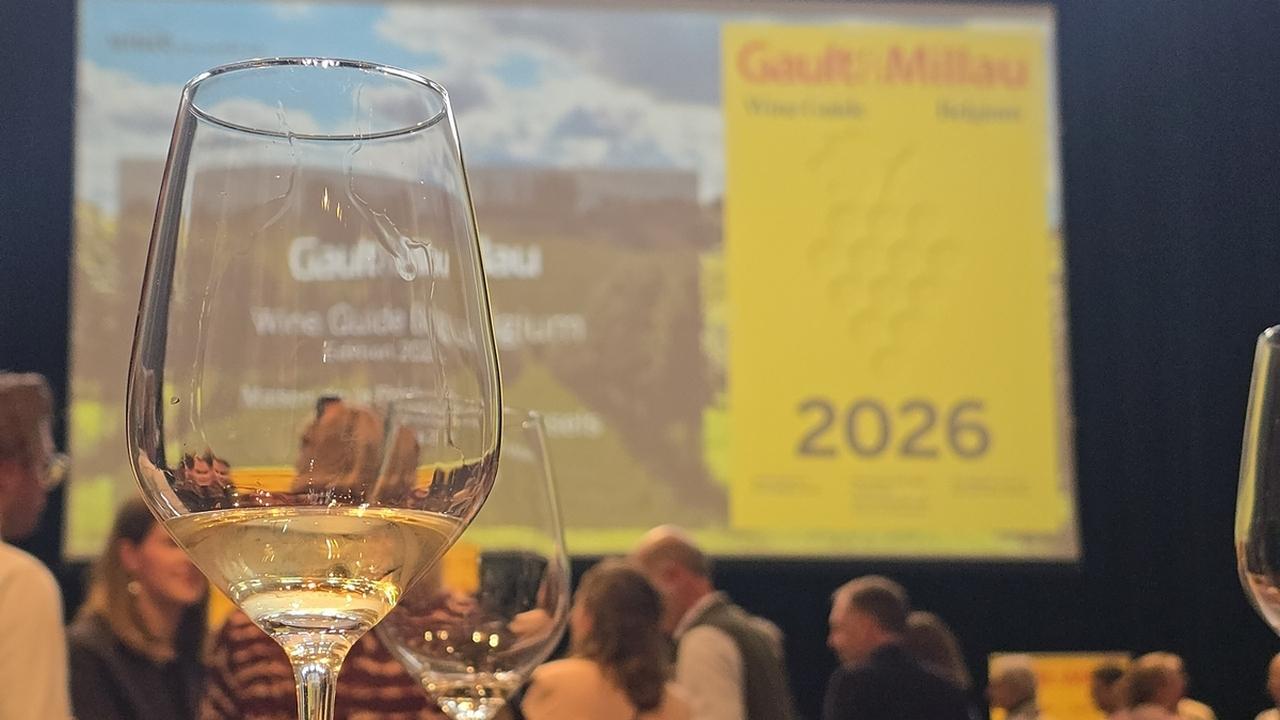
Experience four-star elegance and service

Gault&Millau 2026 • Wine guide
Gault&Millau 2026 • Wine guide
Discover the highlights of the Gault&Millau Wine Guide Belgium 2026 and the Belgian Wine Awards.
 For decades, Belgium's reputation has been built upon beer, gastronomy and artisanal excellence. Wine, meanwhile, remained largely absent from the national conversation. Today, that reality is changing at remarkable speed.
Presented on 15 June at Brussels' Maison de la Poste, the fourth edition of the Gault&Millau Wine Guide Belgium offered compelling evidence that Belgian viticulture has entered a new era. What was once considered a niche curiosity has evolved into one of the country's most dynamic agricultural and gastronomic sectors.
The figures alone tell a remarkable story. Belgium now counts more than 350 winegrowers cultivating nearly 1,050 hectares of vineyards, while national production has reached a record 4.3 million litres. Far from being an emerging experiment, Belgian wine is rapidly establishing itself as a serious player within the European wine landscape.
A Sector Reaching Maturity
Hosted within the monumental halls of Maison de la Poste at Tour & Taxis, the annual presentation gathered producers, sommeliers, restaurateurs and industry professionals from across the country.
The setting itself reflected the ambitions of the sector. Beneath soaring ceilings and elegant neoclassical architecture, conversations revolved around terroir, climate adaptation, grape varieties and the growing international recognition of Belgian wines.
This year's guide is the result of an extensive blind tasting process involving 424 wines evaluated by a panel of 75 expert sommeliers. From this selection, 270 cuvées representing 137 estates earned a place in the publication, including 22 new domains making their debut in the guide.
The numbers reveal more than simple growth. They illustrate a sector undergoing rapid professionalisation while simultaneously expanding both its geographical footprint and stylistic diversity.
Beyond Sparkling Wines
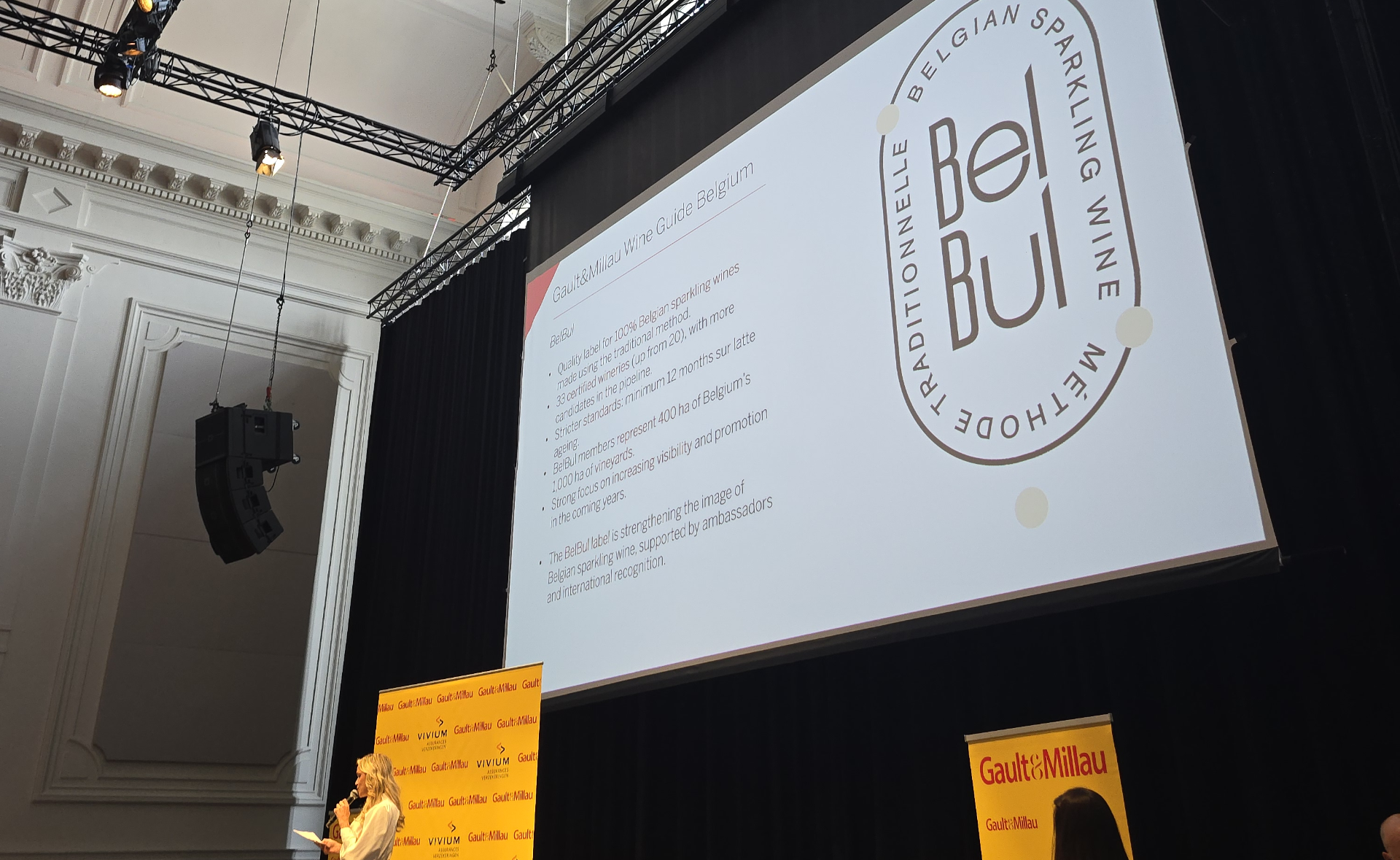
Belgium's success story has long been associated with sparkling wines. Under the BelBul identity, Belgian bubbles have gained increasing recognition among professionals and consumers alike.
Yet one of the most notable developments highlighted during the event was the growing quality and diversity of still wines.
Throughout the tasting sessions, guests discovered a broad spectrum of expressions ranging from elegant Chardonnays and aromatic white blends to increasingly refined red wines and even orange wines. Award-winning cuvées showcased the confidence of a generation of producers willing to move beyond established expectations.
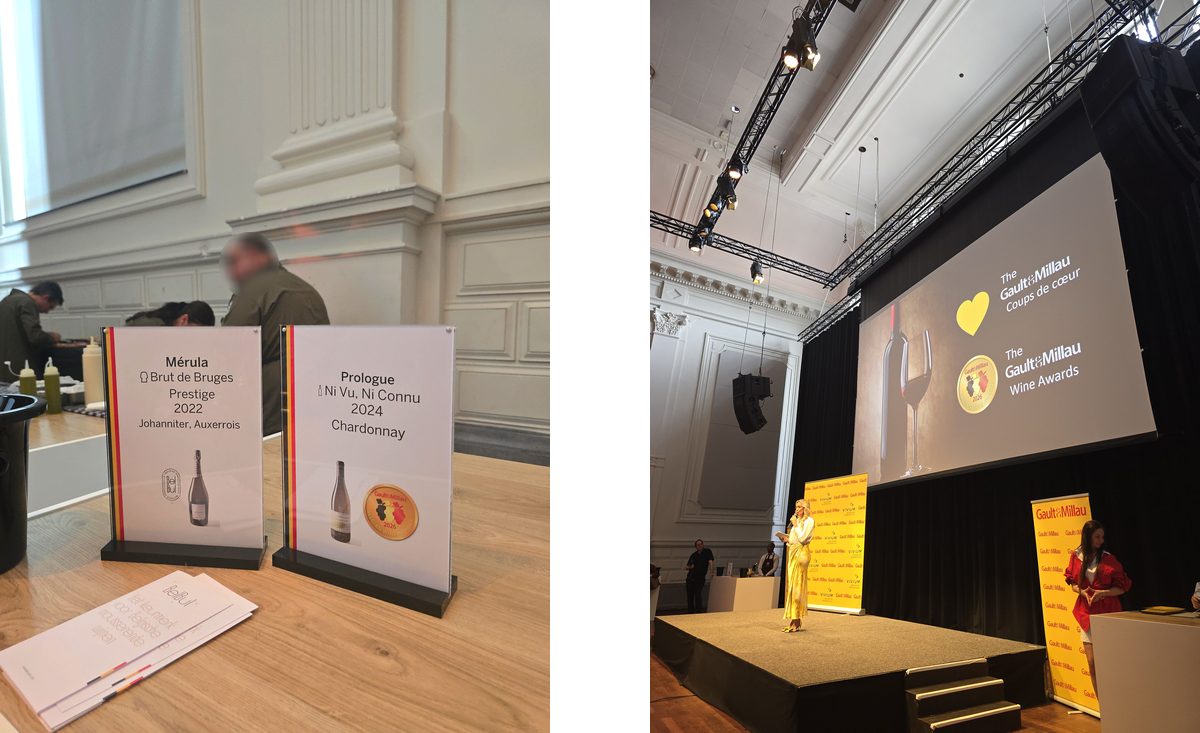
The presence of wines such as Domaine La Falize's Savagnin 2023, Prologue's "Ni Vu, Ni Connu" Chardonnay 2024 and Mérula's Brut de Bruges Prestige 2022 demonstrated the breadth of styles now emerging from Belgian vineyards.
Where Wine Meets Gastronomy
The rise of Belgian wine is closely intertwined with the country's gastronomic excellence.
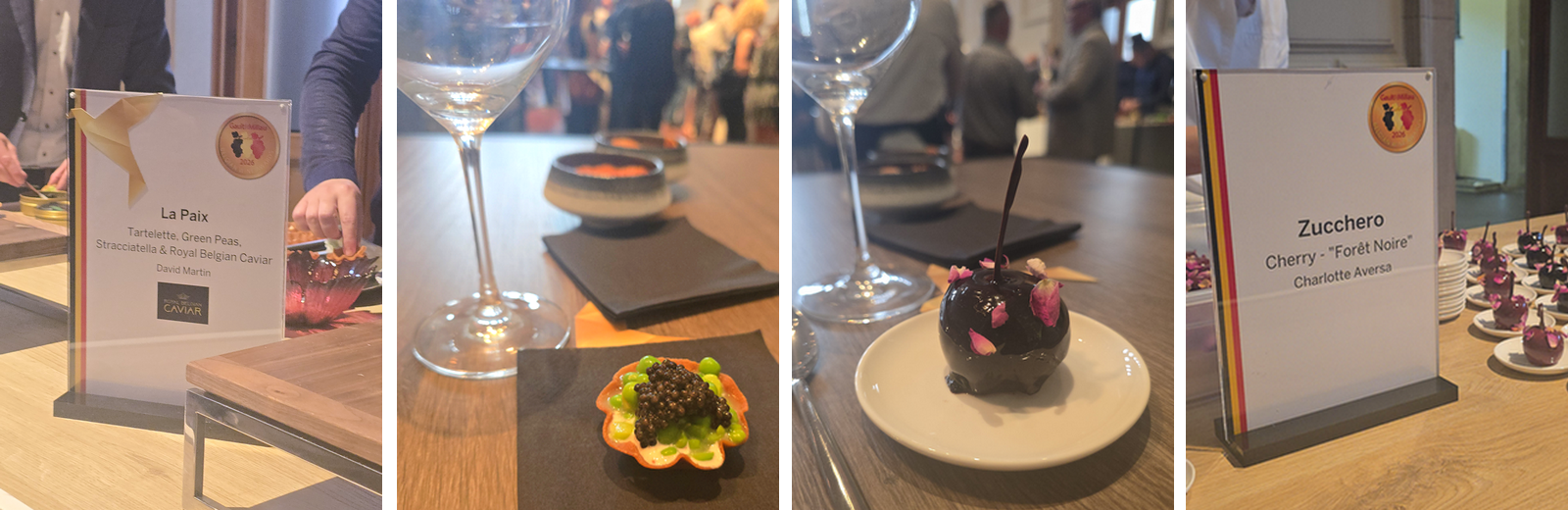
During the event, guests explored pairings that highlighted this natural relationship. Among the most memorable was a refined creation by Chef David Martin of La Paix, combining green peas, stracciatella and Royal Belgian Caviar. The pairing served as a reminder that Belgian wine is increasingly finding its place alongside the nation's finest culinary products.
This dialogue between viticulture and gastronomy may prove to be one of the sector's greatest strengths. Rather than attempting to imitate historic wine regions, Belgian producers are building an identity rooted in their own terroirs, culinary traditions and culture of craftsmanship.
A Promising Future
Gault&Millau's 2026 Wine Guide confirms what many industry observers have been noting for several years: Belgian wine is no longer a promising outsider.
The awarding of 58 "Coup de Cœur" distinctions and 28 Belgian Wine Awards reflects a level of quality that continues to rise across the country. At the same time, new vineyards, new producers and increasing consumer interest suggest that growth remains far from complete.
What emerged most clearly from the gathering at Maison de la Poste was a sense of confidence. Belgian wine is no longer seeking legitimacy; it is building a reputation.
As climate conditions evolve and local production gains momentum, Belgium's vineyards are steadily redefining the country's gastronomic identity. If the latest edition of the Gault&Millau Wine Guide is any indication, the Belgian wine story is only beginning its most exciting chapter.