 French
  German
  Italy
Italy  Spain
Spain  Mexico
  Portugal
  Brazil
  Argentina
  Poland
  Rusia
Rusia  Austria
  Arabic
  Ecuador
  Canada
  Norway
  Benin
Benin  Sweden
  Croatia
  Japan
Japan  Korean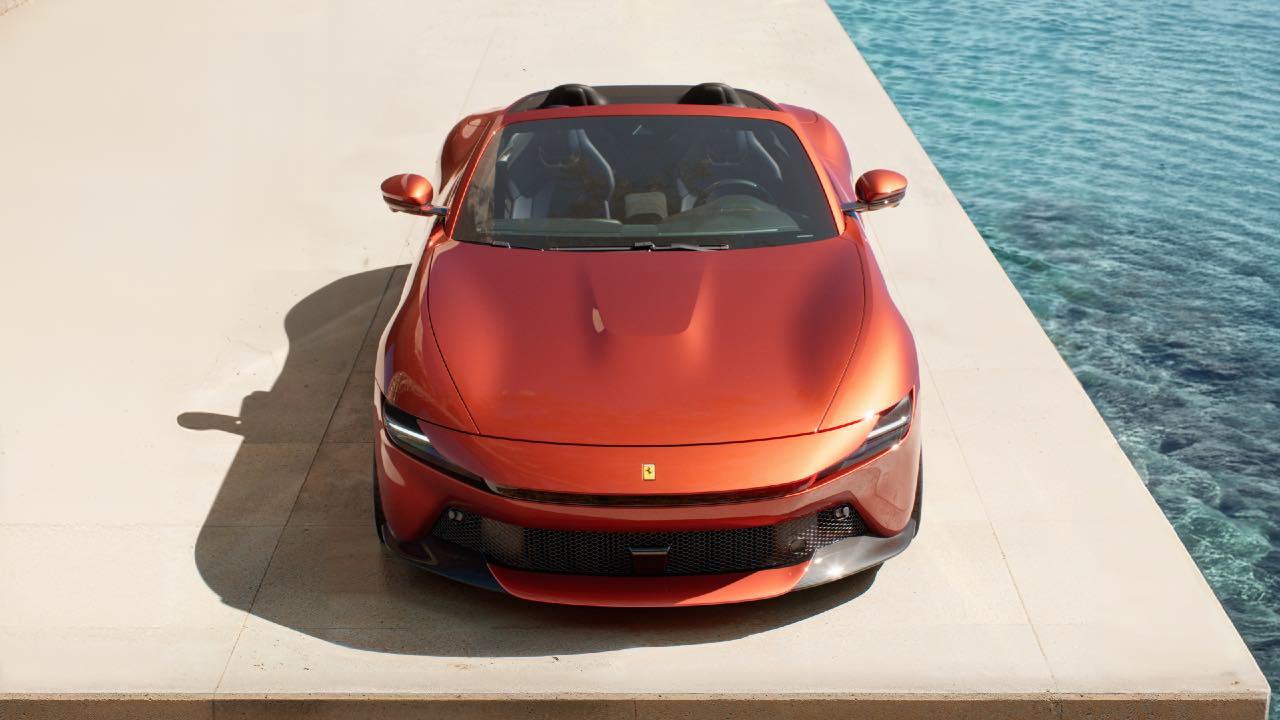
Experience four-star elegance and service

Ferrari Amalfi Spider: Driving Ferrari’s New 640 HP V8 Through Greece
Ferrari Amalfi Spider: Driving Ferrari’s New 640 HP V8 Through Greece
The new Ferrari Amalfi Spider brings together a 640 hp twin-turbo V8, open-air grand touring and a more contemporary approach to everyday usability.
Ferrari’s new Amalfi Spider brings together a 640 hp twin-turbo V8, open-air grand touring and a more contemporary approach to everyday usability. Luxury Brussels travelled to Greece for the International Media Test Drive to discover the latest Spider from Maranello.
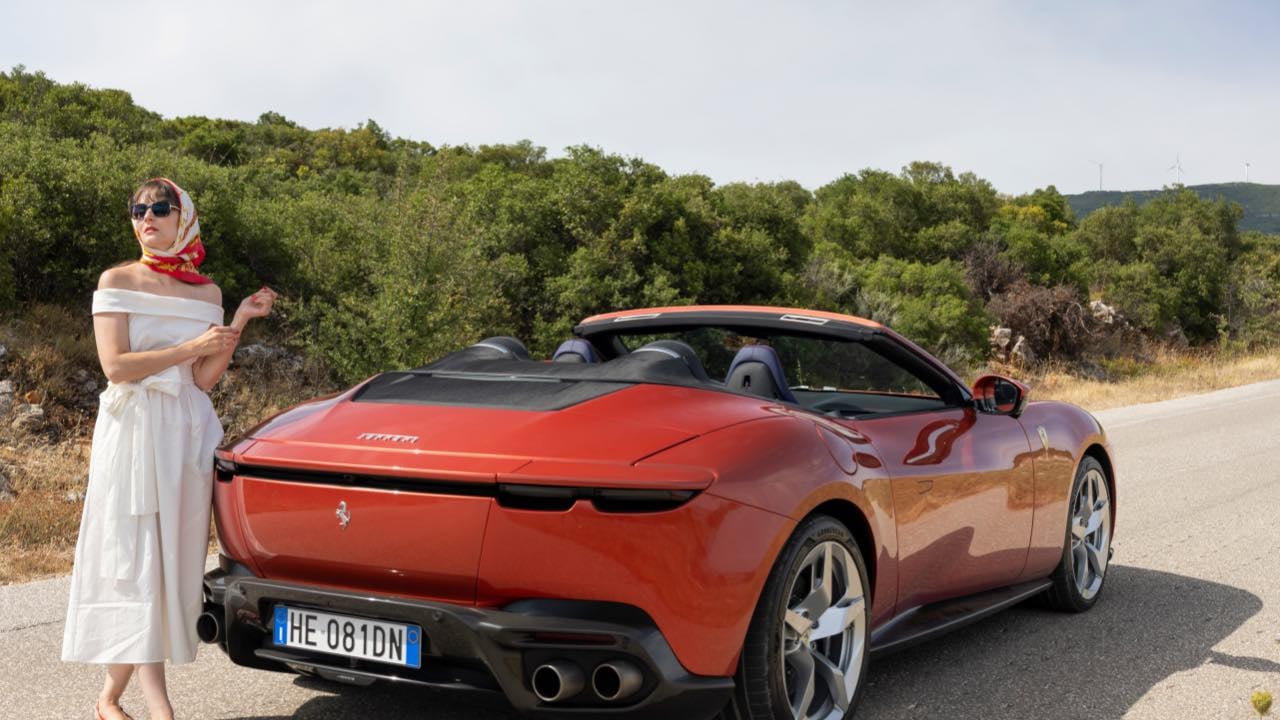
About two weeks ago, I travelled to Greece to join Ferrari for the International Media Test Drive of its new open-top Grand Tourer. Following an evening presentation and Q&A with Ferrari engineers, the following morning was dedicated to what we had all come for: taking the Amalfi Spider onto the winding roads of the Greek mountains.
And perhaps that was exactly the right environment in which to understand it.
Because although the numbers are unmistakably Ferrari - 640 hp, 760 Nm of torque and 0–100 km/h in 3.3 seconds - the Amalfi Spider isn't defined by performance alone. Ferrari has designed it around a broader idea: performance that can be enjoyed more often, in more situations, without sacrificing elegance, comfort or the pleasure of simply travelling somewhere beautiful.
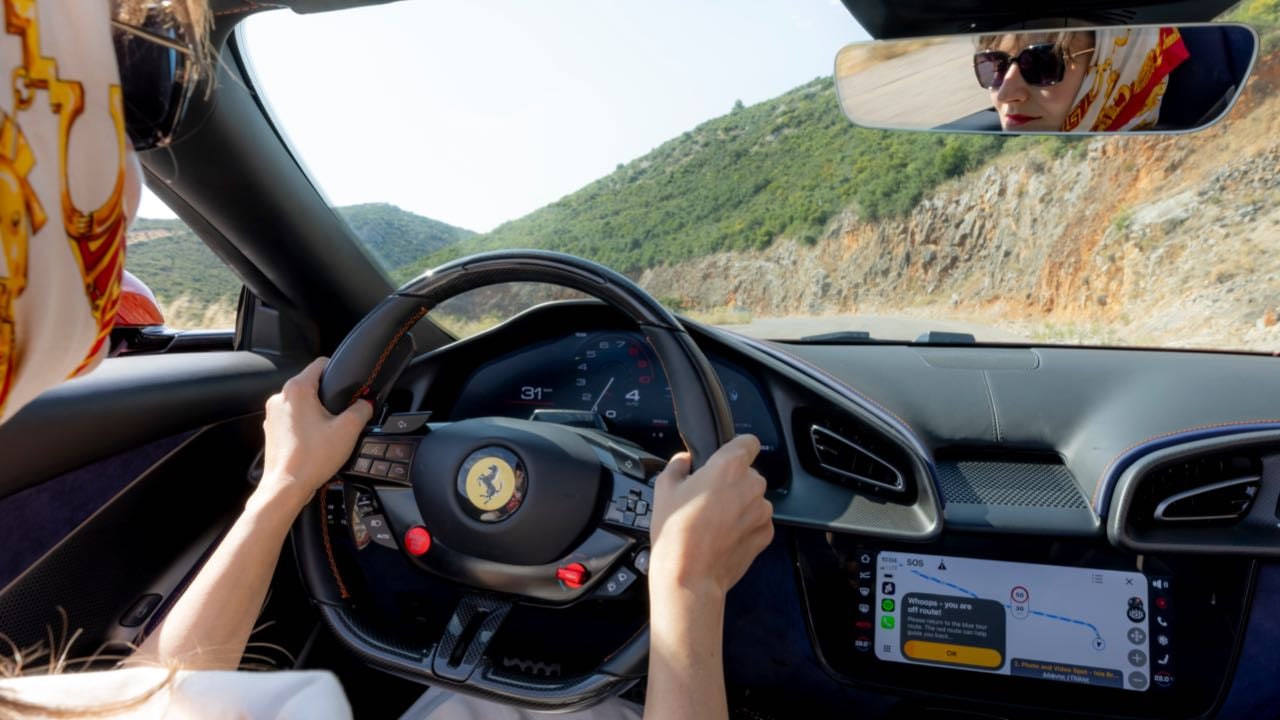
The Amalfi Spider is a Ferrari you can genuinely imagine driving through the city, taking away for a weekend or simply enjoying with the roof down without feeling that every journey needs to become a performance test.
That duality may be its greatest achievement.
640 HP - But That's Only Half the Story
At its heart is the latest evolution of Ferrari's award-winning 3,855 cc F154 twin-turbo V8, mounted in a front-mid-engine configuration. It produces 640 hp at 7,500 rpm and 760 Nm of torque, with a redline of 7,600 rpm and an eight-speed F1 dual-clutch gearbox.
The numbers are appropriately Ferrari:
0–100 km/h: 3.3 seconds
0–200 km/h: 9.8 seconds
Top speed: over 320 km/h.
Ferrari has also worked extensively on response rather than simply chasing a larger output figure. The rotational speed of the two turbochargers can now be independently managed, while their maximum speed rises to 171,000 rpm. New lightweight camshafts and revisions to the engine block have reduced weight as well.
On the winding mountain roads of Greece, you certainly don't forget that you're driving a Ferrari.
A Different Kind of Ferrari Performance
That may be the key to understanding this car.
Ferrari describes the Amalfi Spider as a benchmark for its “performance-driven lifestyle”, bringing together performance, elegance, driving pleasure, ease of use and versatility.
And “ease of use” isn't a phrase traditionally associated with the mythology surrounding supercars.
Here, however, it matters. You can attack a sequence of corners and experience the immediacy expected of a Ferrari, then change the rhythm entirely and simply cruise.
That doesn't dilute the experience. It broadens it.
There is something rather luxurious about possessing enormous performance without constantly needing to demonstrate it.
Inside, Ferrari Rediscovers the Pleasure of Simplicity
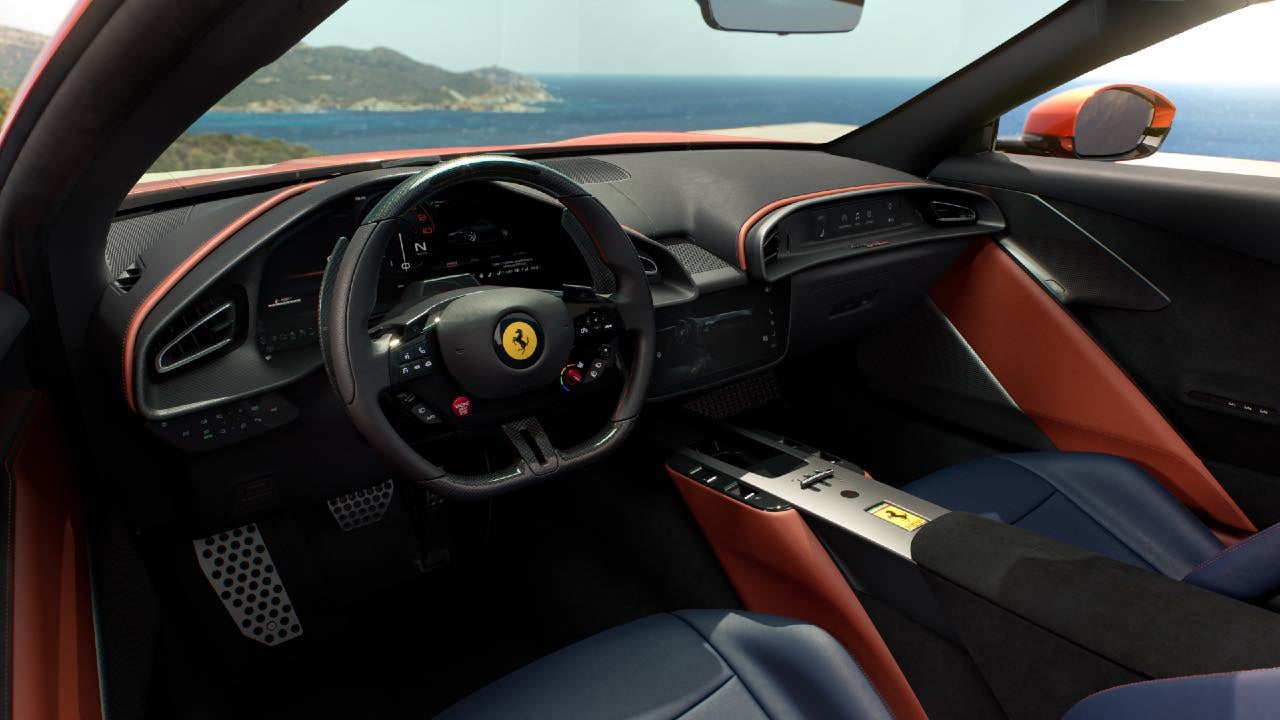
The cabin follows a dual-cockpit architecture, wrapping driver and passenger in individual but visually connected spaces. Ferrari has deliberately simplified the design, allowing materials, surfaces and geometry to take greater prominence.
And one small detail will make many Ferrari enthusiasts particularly happy ( myself included) :
the physical start button is back!
The new steering wheel returns to tactile physical controls, with the anodised aluminium start button positioned on the left.
Sometimes progress means knowing which things shouldn't have disappeared in the first place.
Technology hasn't gone anywhere, of course. There is a 15.6-inch digital instrument display, 10.25-inch central touchscreen and an 8.8-inch passenger display, where your co-driver can follow information including engine revs and G-forces. Apple CarPlay and Android Auto are integrated too.
But the technology feels like part of the experience rather than the reason for it.
The result is a cabin that can accompany two very different moods: focused driving when the road becomes interesting, and considerably more relaxed grand touring when it doesn't.
A Spider Designed to Be Lived With
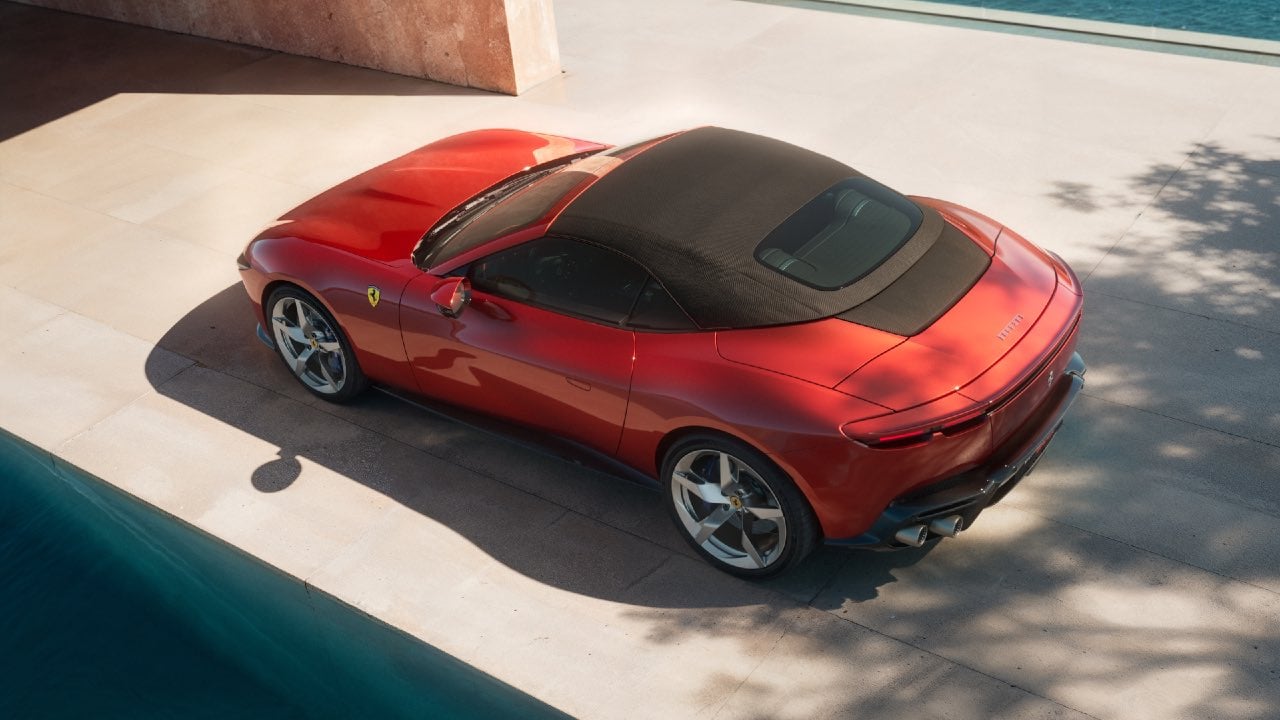
This philosophy becomes particularly apparent in the roof.
The fabric soft top opens in just 13.5 seconds and can be operated while travelling at speeds of up to 60 km/h. When folded, the entire mechanism occupies only 220 mm, helping preserve useful luggage capacity: 255 litres with the roof closed and 172 litres with it open.
The fabric itself has five layers, with acoustic and thermal insulation comparable to Ferrari's retractable hard-top solution.
Then there is the wind deflector.
Integrated into the rear-seat backrests, it deploys electrically at the touch of a button and creates a more stable pocket of air around the occupants, reducing turbulence and noise around the head. It can even be opened at speeds of up to 170 km/h.
These aren't headline-grabbing performance figures.
They are details designed around actually using the car.
And that's precisely why they're interesting.
Serious Engineering, Quietly Working in the Background
Don't mistake comfort for softness, though.
Underneath the Amalfi Spider is some very serious Ferrari engineering.
The car introduces brake-by-wire, giving Ferrari greater precision over braking control, together with ABS Evo, which operates across different grip conditions to improve braking performance and stability.
At the rear sits an active aerodynamic wing with three positions: Low Drag, Medium Downforce and High Downforce.
The system reacts automatically to speed and longitudinal and lateral acceleration. Under hard braking or high-speed cornering, it can move into its High Downforce configuration; at 250 km/h, Ferrari says it can generate up to 110 kg of additional rear load, for a drag increase of less than four per cent.
The clever part is that you don't need to think about any of this.
It simply happens underneath you.
Unmistakable Italian Design
Visually, the Amalfi Spider follows the same philosophy.
Designed by the Ferrari Design Studio under Flavio Manzoni, its silhouette is remarkably clean: long bonnet, sculpted volumes and surfaces that feel deliberately free of unnecessary visual noise.
Ferrari describes its approach as fluid and minimalist, preserving the proportions and formal purity of the Amalfi whether the roof is open or closed.
There is also a new signature colour, Rosso Tramonto.
Inspired by the meeting of sea and sky at sunset on the Amalfi Coast, the shade introduces subtle orange undertones into Ferrari's red palette.
It's a small detail that says quite a lot about the world Ferrari is building around this particular model.
The conversation isn't exclusively about lap times anymore. It's also about colour, materials, destinations and experience.
Through the Mountains of Greece
Which brings us back to Greece.
Our drive took us through winding mountain roads, precisely the kind of environment where 640 hp, responsive steering, powerful brakes and an accomplished chassis make perfect sense.
There were moments to explore what the car could do.
But there were also moments when the best thing to do was simply lower the roof, settle into the car and enjoy the road.
And perhaps that is where the Amalfi Spider surprised me most.
Ferrari hasn't created a less exciting car in pursuit of comfort. It has created one with a wider spectrum of experiences.
Fast when you want it.
Relaxed when you don't.
Elegant enough for a beautiful destination, yet technically sophisticated enough to remind you exactly where it came from.
The Ferrari You Could Actually Use?
The word “practical” will always be relative when discussing a Ferrari.
But consider what is here: a proper luggage compartment, 2+ seating, smartphone connectivity, a well-insulated roof, wind management for open-top driving, comprehensive driver-assistance technology and a cabin designed around both performance and comfort.
Ferrari even equips the Amalfi Spider with adaptive cruise control, automatic emergency braking, blind-spot detection, lane-keeping assistance and other next-generation ADAS systems.
This is still an exotic Italian V8 Spider capable of more than 320 km/h.
It simply doesn't require every Tuesday morning to feel like qualifying at Monza.
And I rather like that.
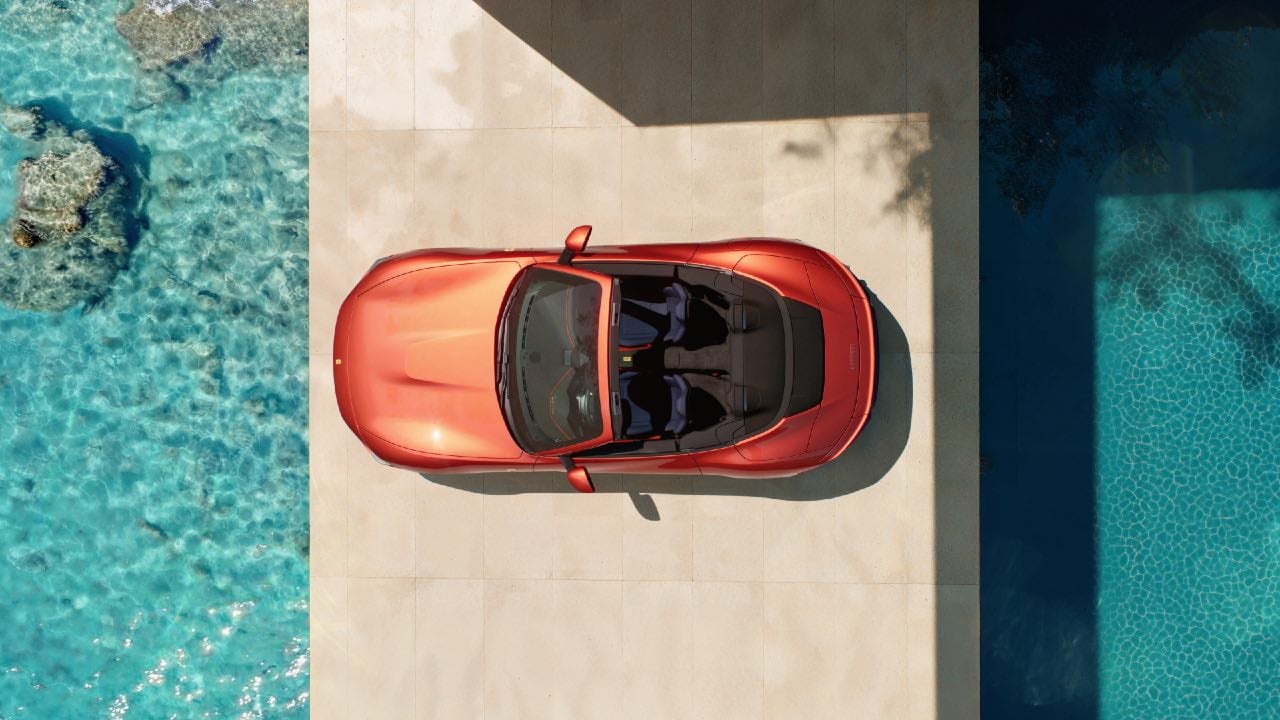
Ferrari Amalfi Spider — Key Specifications
Engine: 3,855 cc twin-turbo V8
Power: 640 hp at 7,500 rpm
Torque: 760 Nm
Redline: 7,600 rpm
Transmission: 8-speed F1 dual-clutch
0–100 km/h: 3.3 seconds
0–200 km/h: 9.8 seconds
Top speed: >320 km/h
Dry weight: 1,556 kg
Weight distribution: 48% front / 52% rear
Luggage capacity: 255 L roof closed / 172 L roof open
Soft top: 13.5 seconds; operable up to 60 km/h
-
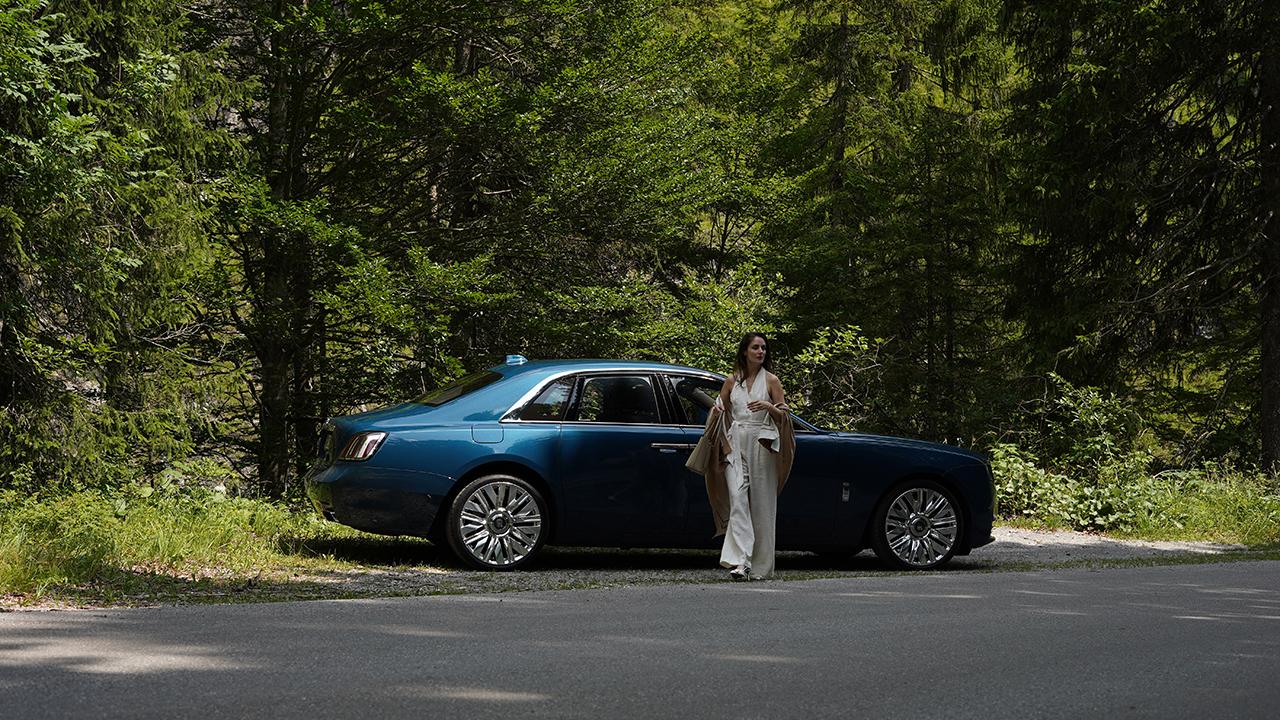
A Bavarian encounter, with a Ghost...
By Ruxandra — behind the wheel of the Rolls-Royce Ghost Series II.